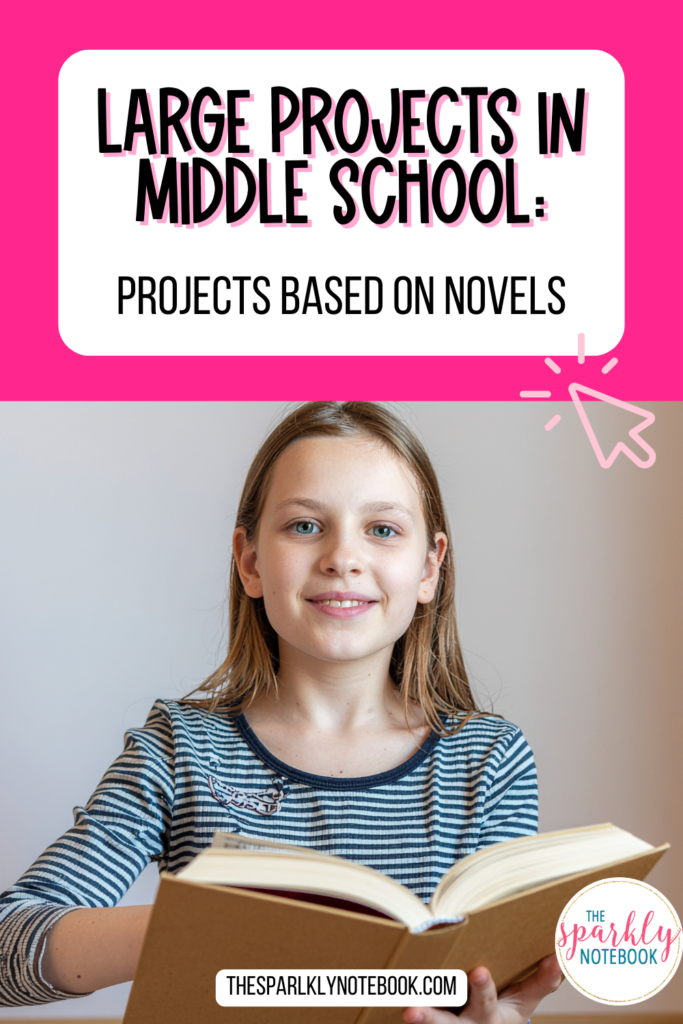
(Project Series Part 4: Project Ideas Based on Novels for Middle School ELA
We’ve talked about classroom setup. (Part 1)
We’ve talked about timelines. (Part 2)
We’ve talked about organizing materials. (Part 3)
Now it’s time for the part students actually get excited about: the projects themselves.
Novel-based projects are some of the most powerful large projects you can implement in middle school ELA because students already have a deep understanding of the text. Instead of ending a novel with a traditional essay every time, we can invite students to apply their thinking in creative, structured, standards-aligned ways.
Below are several novel-based project ideas that work beautifully within the systems we’ve already discussed in this series. This post will give you the overview and direction, while linking you to deeper resources where needed.
Creating a book trailer continues to be one of the most engaging ways to wrap up a novel study, and it was made even easier with the classroom technology boom that happened after 2020.
What we really like about this project is that students must think critically about theme, tone, character development, and major plot points without simply retelling the story.
In order to create a strong trailer, students need to:
Because students must condense the story into a short, compelling preview, they have to prioritize meaning over summary. This project aligns beautifully with standards related to theme, characterization, and author’s craft.
This project works well individually, in pairs, or in small groups depending on your timeline and classroom setup.
Another strong option is asking students to adapt the novel into a film concept or parody. This type of project pushes students beyond comprehension and into interpretation.
Students might cast actors for key roles, justify those casting decisions with textual evidence, rewrite a pivotal scene as a script, or create promotional materials for their imagined film. When parody is involved, students must understand the original tone and structure deeply enough to twist it intentionally.
These projects assess character motivation, theme, structure, and tone in a way that feels creative rather than formulaic.
In the store, we have a Book Parodies Project. Learn more from the description below!
This standards-based book parody project will have students eagerly taking annotations, breaking down the plot structure, and working diligently on rewriting the novel with some humor embedded (and we all know middle schoolers LOVE the opportunity to be funny!) Project-based learning can translate to the real world, and students will love the opportunity to put their tech skills into practice in the classroom.
We also have some project ideas based on novels that are focused on characterization. This first one, the Character Police File, works especially well for books where there is a crime that has taken place.
In this project, students create a formal “case file” that analyzes a character in depth.
The file might include:
Students must justify each claim with textual evidence, which keeps the project rooted in analysis rather than creativity alone.
This project works well as an individual assignment for deep analysis, but it can also be adapted for partner work where one student focuses on gathering evidence and the other analyzes patterns and motivations.
Fun Addition: Have students create the files as actual files with a picture of the character clipped to the front, so that when you open it, it is like look at a police file.
The Character Dinner Party is a fun end-of-year option.
In this project, students choose (or are assigned) a character from a novel read during the year. It could all be from the same novel, or they could get characters from different novels.
As part of the background leading up to the “main event” for this project (i.e. the dinner party), students will work through a series of tasks as they create full profiles for the charcters including but not limited to the following.
After some research, they dress as that character and remain “in character” during a structured class event. Throughout the dinner party discussion, students respond to prompts as their character would, quote lines from the text, defend decisions, and interact with other characters in the room.
You can structure the event with discussion prompts, require evidence-based responses, and include a written reflection afterward to assess individual understanding.
This project becomes especially powerful when characters from different novels interact, allowing students to compare themes and perspectives across texts.
Another strong option is asking students to place characters into modern, real-world contexts. Students might create a social media profile for a character, design a public awareness campaign based on a theme from the novel, or write a modern interview with the character reflecting on their decisions.
This is a great “Choice” project for the middle of the school year.
These projects connect directly to authentic communication skills and align well with ideas shared in Real-World ELA Projects: 20 Authentic Ways to Apply Middle School English Skills.
You don’t have to design every project from scratch.
Many of our Standards-Based Units include performance tasks aligned directly to specific standards. These tasks can be expanded into larger novel-based projects or combined across units to create a culminating experience.
Because these projects are already aligned to standards and include structured expectations, they pair well with the timeline and material organization systems discussed in Parts 2 and 3 of this series.
You can explore grade-level bundles here:

Sometimes the most effective novel project is simply expanding what’s already built into your curriculum.
These 6 project ideas based on novels are a great starting point as you begin to consider how to really engage your students in both novels and large projects, and you could fill a whole school year with just the projects listed above.
The most important thing is to consider adding at least one of these projects to your plan for next year, as working with novels in this way is sure to deepen your students’ understanding and engage them with the text in a different way.