

(Project Series Part 3: Preparing for Project Success)
If classroom setup is the foundation of strong projects in middle school ELA and the timeline is the backbone, then materials and planning are what keep everything running smoothly day to day.
The goal is for students to move through the process independently, but when they struggle to find materials, they get lost fast, and they start to depend on you more.
Most of this can be avoided with intentional prep before the project ever begins.
This post focuses on gathering, organizing, and preparing materials so projects feel structured, accessible, and manageable for both you and your students.

Before printing or creating folders for your projects in middle school ELA, get clear on:
This prevents over-prepping and helps you decide which materials need to be:
Many teachers find this step easier when project ideas are already embedded in standards-based units or novel-based project resources. When the project structure is already defined, planning becomes about organization rather than design.
Even in digital classrooms, physical project packets are essential for large projects. When students struggle during projects in middle school ELA, it is much easier to grab the big packet or binder that has all the materials for reference than to try to find the materials online.
Include:
Use a colored cover page (bright and consistent). That color becomes a visual anchor—students instantly know where their project materials live. Even if you use binders or folders, change out the cover to be the same bright color.
As mentioned in Part 1 of this series, packets should always exist alongside:
Redundancy reduces questions and builds independence.
One of the easiest ways to reduce chaos during long projects is to laminate anything students will reference or write on repeatedly.
Consider laminating:
Students can:
This saves paper, reduces clutter, and keeps key information intact for the entire project.
You can also:
Confusion often happens when physical and digital systems don’t match.
Avoid this by:
For example, label the pages in the physical packet the same as in the digital copies.
For partner or group projects:
When physical and digital systems align, students work more independently and ask fewer questions.
Prep Materials by Project Type
Different projects in middle school ELA require different prep systems.
Novel-based projects (like book trailers, parodies, or movie adaptations) work especially well with this setup because multiple students contribute to a single final product over time.
You don’t need to create every project from scratch.
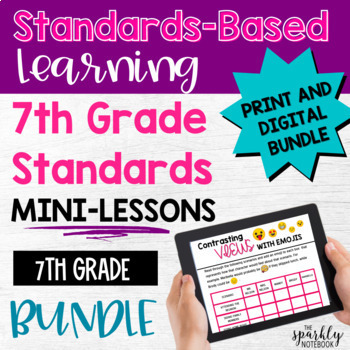
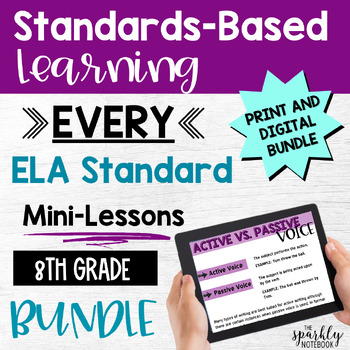
We have many projects built into our Standards-Based resource line that specifically align with the standard being practiced. You can choose one or combine projects from different units for a larger project.
Click below to see the units for each grade level:

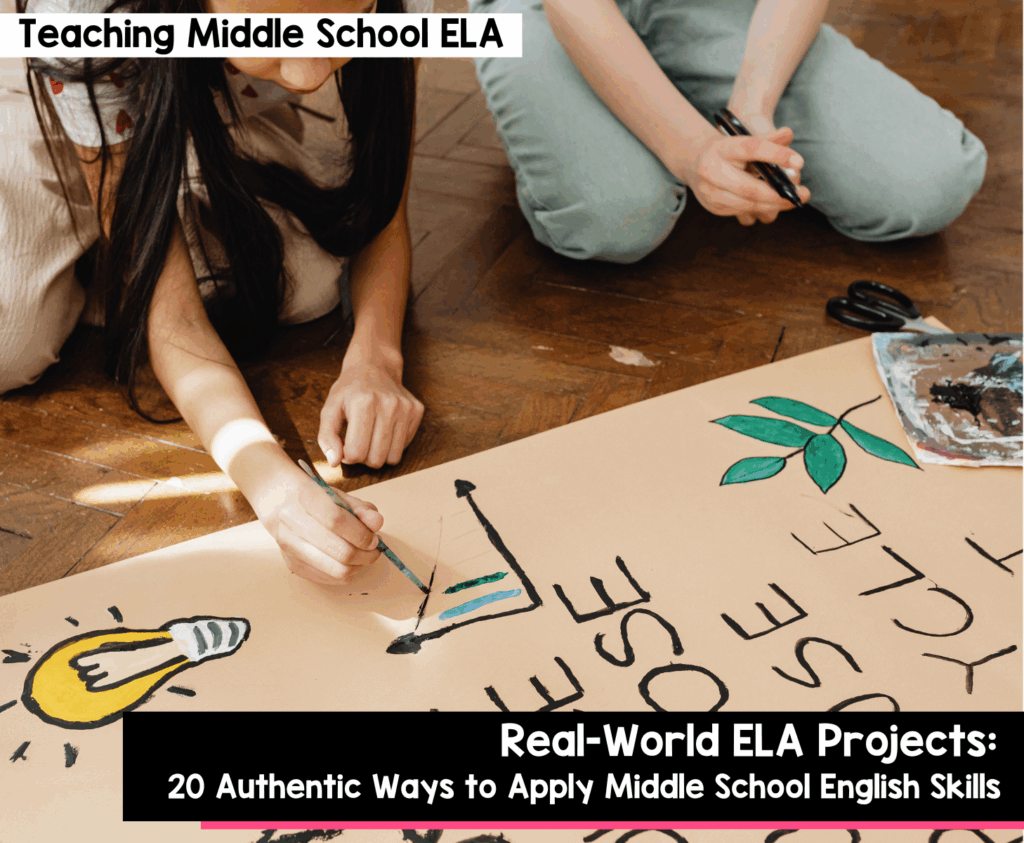
To get more project ideas, check out our blog post on 20 real-world project ideas!
Create a Predictable “Project Day” Routine
Project days run more smoothly when students know what to expect. So, when possible, keep routines consistent day-to-day.
Post daily:
You may also want:
This structure keeps workdays productive without feeling rigid.
Large projects don’t need more work, but they do need better systems.
When you:
You free yourself up to do what matters most: conferencing, guiding, and supporting student thinking.
In the next post in this series, we’ll dive into project ideas and examples you can use right away, including novel-based and real-world ELA projects.
Stay tuned 💛