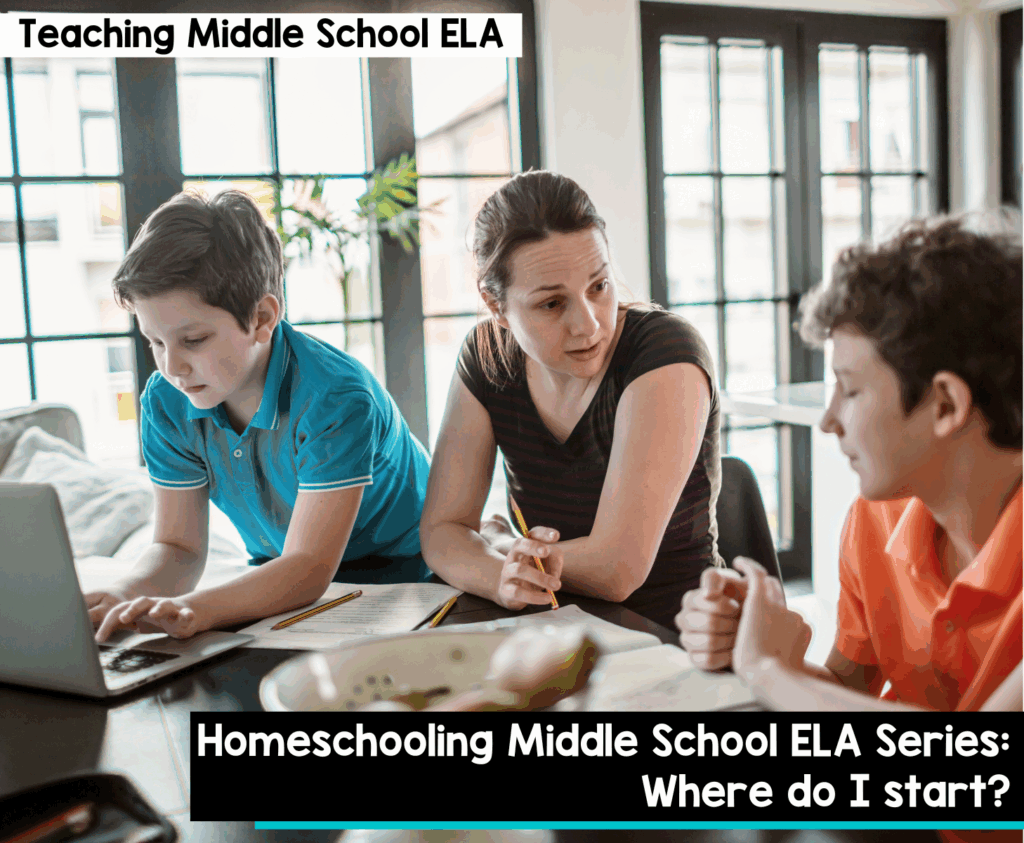
Tips for parents who are homeschooling middle school ELA from ELA teachers.
So, you’ve decided to homeschool your middle schooler. Maybe you’ve been homeschooling all along, or this is a new endeavor. Either way, bravo! 🎉
Middle school is such a unique (and sometimes wild!) stage of life, and having the opportunity to shape your child’s learning experience is a big gift.
But let’s be honest: it can also feel overwhelming.
If you’re staring at curriculum options, pacing guides, or wondering if your child is “on track,” you’re not alone. Middle school is a heavy developmental time, not only socially and emotionally but academically too. Especially in ELA (English Language Arts). This is where the skills really start to stack: writing becomes more structured, reading comprehension deepens, and critical thinking takes center stage.
If homeschooling your child in ELA has you a bit concerned, here are some tips to help you start strong.
Even if you’re homeschooling, state or national standards are still a great guidepost. They help you see what skills your middle schooler should be working toward.
In ELA, the key areas include:
Tip: Not sure how to break down standards into bite-sized goals? We’ve written posts like What is a Pacing Guide, Exactly? that show you how to map it all out.
Middle schoolers don’t just need to read more, they need to read smarter. Encourage your child to:
Again, reading skills in middle school switch from what happened in the story to why it matters, you have to focus more deeply on what the text and author are really saying to the reader.
Paired passages are a great tool here—they show students how to compare texts, evaluate evidence, and practice higher-order thinking. (Check out our post: Same Paired Passage…10 Different Activities for ideas for some ideas on how to use the paired passages in many different ways with your student.
At this stage, writing instruction should move from getting words on the page to organizing ideas clearly.
Here are some ideas:
Want an easy start? Use a choice board of writing prompts to give your child some freedom while still targeting core skills.
You don’t have to have it all figured out in month one. Focus on:
Middle school is a big developmental leap, but with the right mix of structure and flexibility, your homeschool situation can nurture independence, curiosity, and confidence.
We have a bunch of resources in the store that can help if you need more guidance or if there is a specific standard that you’re struggling to teach. Feel free to look around here!
If you prefer to shop on Teachers Pay Teachers, you can check out the Tpt Store HERE.