Get more bang for your buck this school year with 10 ways to use the same paired passage.
Our Sparkly Notebook paired passages are some of our most-loved resources, and for good reason!
They’re high-interest topics, standards-aligned, and packed with potential, but did you know you can do WAY more than just assign comprehension questions with them?
With just one paired passage set, you can build an entire week (or more!) of engaging, standards-driven lessons.
Let’s walk through 10 different activities you can do with the same paired passage set!
Reminder: We have a bunch of paired passages available in the store. Check out our blog post 32 Paired Passages to Use in Middle School ELA for a rundown of the many paired passages available. If you want to go straight to the store, click here to go directly to the Paired Passages Category.
1. Comprehension Questions
Let’s start with the obvious: use the questions already included in your paired passage set.
Our questions are aligned to the standards and cover skills like citing evidence, analyzing structure, comparing texts, and more.
Optional: Let students answer in pairs and defend their answers together! This is a good option, especially early in the year as you create a class culture of unity and teamwork. It is also a good option when your students are more chatty (i.e., before a break)
2. Sticky Note Annotations
Give students a few sticky notes to annotate the passages. They can write down questions, vocabulary words, personal reactions, or track the author’s tone.
Tip: When using sticky notes with students, make different colors mean different things or identify a different focus. For example, yellow identifies a vocab question, pink is a personal reaction, etc. Then, when you are quickly looking over students’ work, you can see which part of the annotating students are struggling the most with, and you can provide extra suggestions and guidance. Quick and effective!
Post discussion questions around the room that relate to both texts. Have students move in small groups and respond to each one on poster paper or sticky notes.
Optional: Gallery walks can get pretty monotonous if you don’t find ways to mix it up. We suggest giving each student a different path. Use an AI tool to create a schedule for each student or pair of students. This will identify which question they go to in each round, making the groups change with each question.
Assign students a “side” from the paired passage (or allow choice) and host a mini-debate using text evidence to support their arguments.
Tip: Check out our post on How to Teach SL.1–3 in Middle School ELA. This post goes over some key goals for working on speaking effectively in middle school ELA.
Ask students to write a short, standards-aligned summary of each article, then another paragraph comparing the two.
Tip: This is a great time to work on being concise. Challenge students to keep their summary under five sentences, but then debate each summary as a class to see who captures the reading best in the most concise way!
Have students rewrite the headline or title of each article based on tone, main idea, or purpose, and then justify their decision with textual evidence.
Tip: Do this as a creative warm-up or exit ticket idea!
Pull direct quotes or paraphrased ideas from each article and quiz students on where it came from and how they know.
Optional: Make this a competitive group activity! Line students up in groups and give them something magnetic with their group number. After you read the quote or idea, students at the front of each line will race over to a whiteboard and put their marker on the title of the paired passage they believe the information came from. This can be a lot of fun before they even read the passage. Then they are working completely off the title!
After reading both texts, have students write a full argumentative essay using the texts as support. Don’t forget planning and revision steps!
Suggestion: Break the writing process into parts if needed. Don’t be afraid if this lasts multiple class periods.
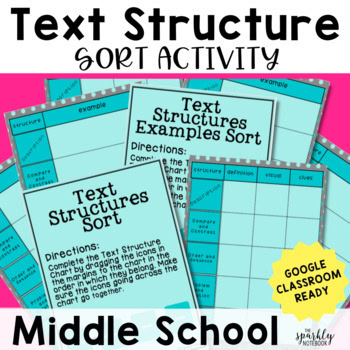
Have students identify each passage’s structure, then sort short examples into categories (problem/solution, chronological, cause/effect, etc.).
Tip: We have a resource called the Nonfiction Text Structure Digital Sort that could help you set up this activity.
Pose a question based on the topic of the paired passage and give students two sides to choose from. They “stand up” to speak or “stay put” to listen. This is a pretty simple way to have a quick discussion and pull out examples from the text.
Paired passages don’t have to be one-and-done. With one strong set of texts, you can:
Need more ideas? Check out our blog post on New Ways to Use Paired Passages for games and movement-based review!