

Want a smoother, less stressful school year? One of the best things you can do this summer is build your classroom systems before students arrive. When you build your classroom systems intentionally, you create routines and structures that support learning all year long.
When teachers think about preparing for a new school year, they often jump straight to the fun stuff.
And while all of those things can be important, they aren’t the foundation of a successful school year.
The foundation of your classroom has to be your systems because even the best lesson, prettiest classroom, and most positive attitude can fall apart when the kids start asking to go to the bathroom every other minute, or can’t find the art supplies, don’t know what to do if they finish early, or don’t know how to turn in their work.
Even the most engaging lesson can fall apart if students don’t know what to do, how to do it, or what is expected of them.
That’s why one of the best things you can do before the school year starts is build your classroom systems.
Classroom systems are the routines, procedures, and structures that keep your classroom running smoothly.
They answer questions like:
Good systems eliminate confusion, and good teachers have great systems!
Many new teachers spend hours planning activities but very little time planning procedures.
The problem?
Activities only last a day or two.
Systems impact every single day of the school year.
Think about how much time can be lost because students:
Now imagine multiplying those interruptions by 180 school days.
Strong systems save instructional time.
More importantly, they create consistency for students.
When you build your classroom systems first, every lesson and activity becomes easier to manage by eliminating redundant questions and monotonous explanations.
One of the easiest ways to identify systems you need is to think about how last year went.
Ask yourself:
Those answers often point directly to the systems that need attention.
For example, if managing make-up work was a challenge, consider reading: The Best Plan for Working with Absent Students: This post walks through creating systems that make absent work easier for both you and your students.

Your classroom systems should support the type of instruction you want to deliver. For example, if you plan to focus on standards-based instruction, you may want systems for:
We have a couple of blog posts that can get you started as you think through these systems. First, Using Standards to Drive Your Curriculum and Standards into Learning Targets. Both of these posts can help you think through how instructional systems can support student learning throughout the year.
Writing is one of the key sets of standards that middle school ELA teachers need to consider, and middle school students become stronger writers through consistency.
One of the best classroom systems you can establish is a predictable writing routine. This doesn’t mean students need to write essays every week. It simply means creating a structure that helps students regularly practice planning, drafting, revising, and editing.
If writing instruction is a major focus for your classroom, be sure to check out: A Complete Guide to Every Middle School Writing Standard. This post breaks down the writing standards and can help you determine where writing routines naturally fit into your curriculum.
What happens when students finish early?
What should students do when they need extra practice?
What happens when you are working with a small group?
These situations become much easier when you already have systems in place.
Don’t know where to start? Some teachers use:
The key is consistency. Students should know exactly what to do without asking; otherwise, the system is not good enough yet!
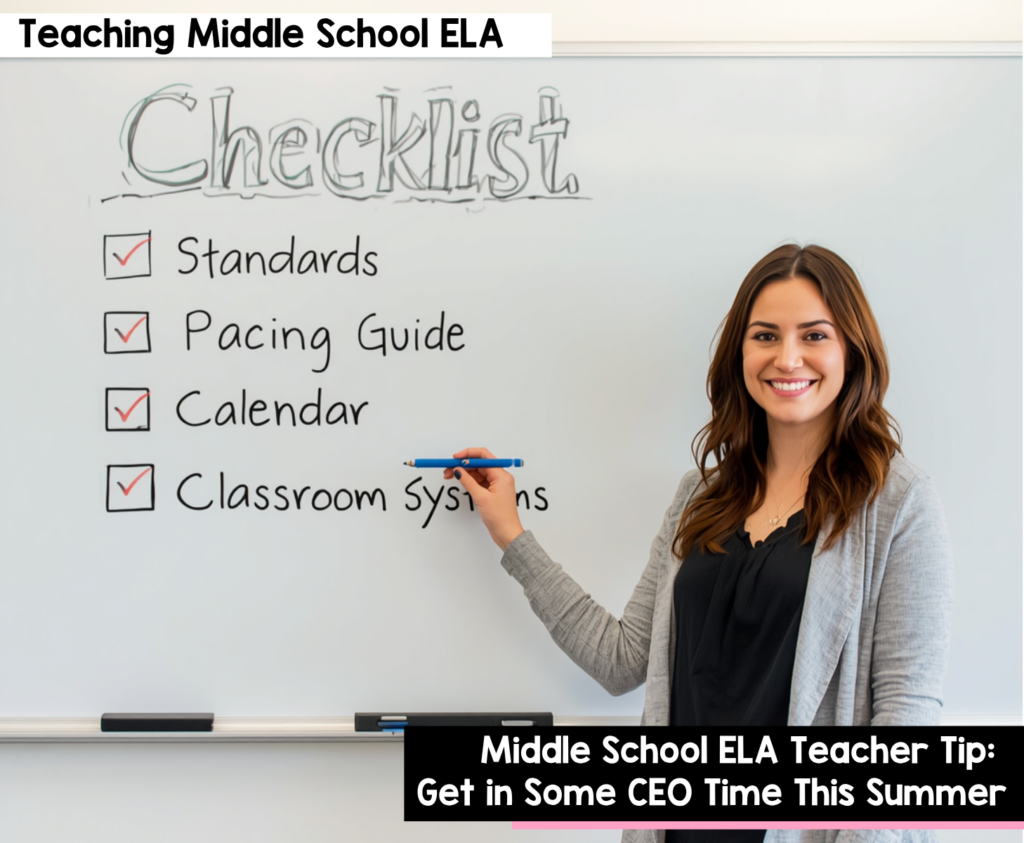
In our recent teacher tip post about getting some CEO time during the summer, we discussed the importance of working on your classroom instead of always working in your classroom.
Building systems is one of the best examples of CEO work.
You’re creating structures that will support everything else you do throughout the school year.
The activities may change. The novels may change. The projects may change. But strong systems continue working for you all year long.
When you build your classroom systems before school starts, you’re making an investment that will pay off every single day of the year.
When students know what to do and what to expect, your classroom becomes more efficient, less stressful, and more productive.
The best part?
Most of this work can be done before the first student ever walks through your door.
And that’s time well spent.