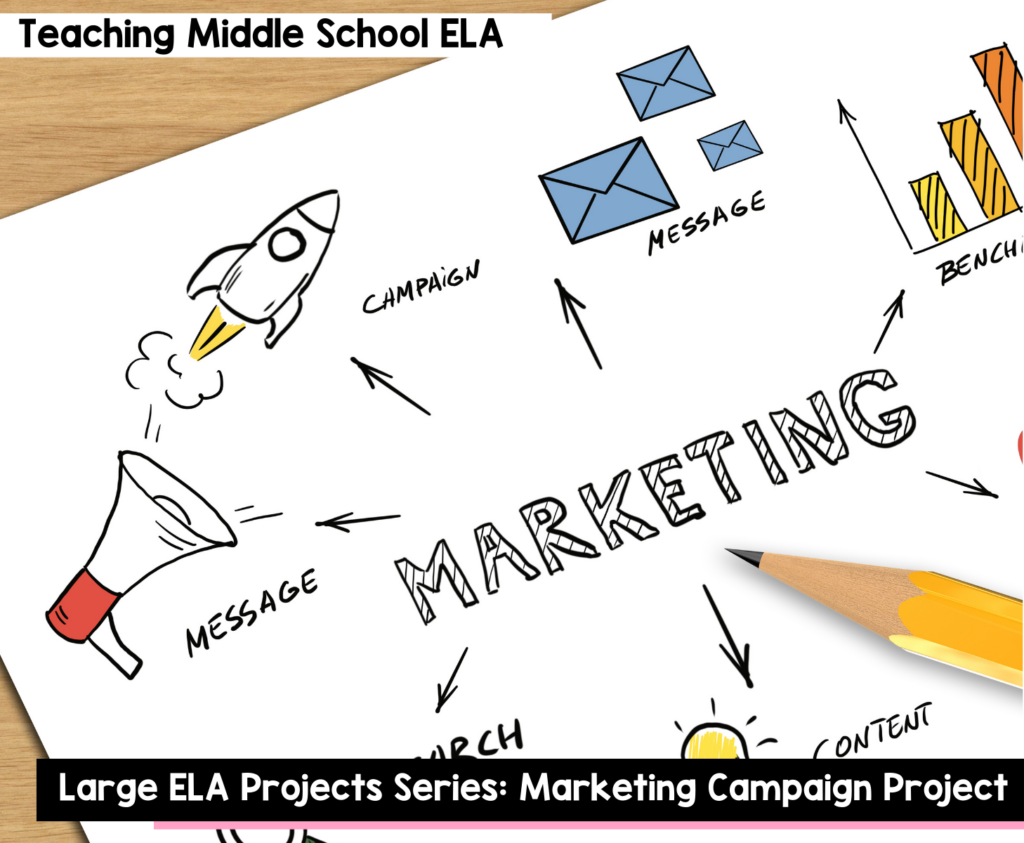
In this ELA project, we are building out a marketing campaign project that includes both short and long-form writing examples. This is similar to what students might experience as content creators or on a marketing team.
Throughout this series, we’ve focused on creating meaningful, structured, and engaging large projects in middle school ELA.
We’ve talked about classroom setup, timelines, materials, novel-based projects, and cross-curricular ideas. Now, we’re shifting into a real-world writing project that students instantly connect with: creating a marketing campaign.
This project helps students see that writing is not just something they do for school; it’s something used every day in business, media, and communication. From social media posts to product descriptions, students are already surrounded by marketing. This project simply gives them the tools to analyze and create it themselves.
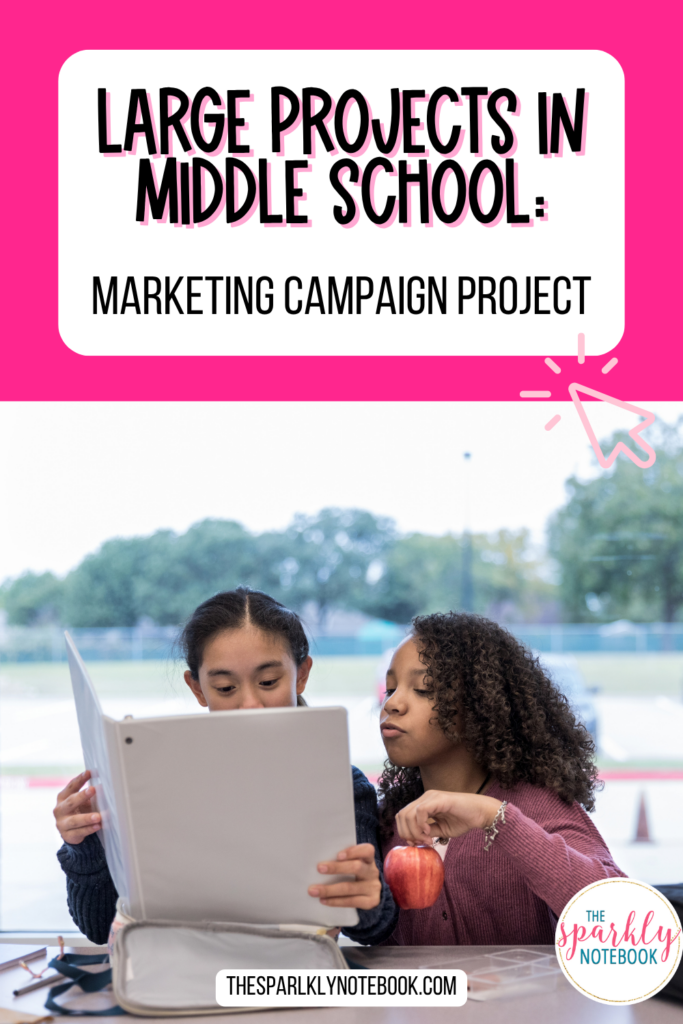
In this project, students develop a full marketing campaign for a product, event, or idea. The goal is to combine short-form writing that grabs attention quickly with long-form writing that explains, persuades, and informs.
Students begin to understand that strong writers don’t just write well; they adjust their writing based on the audience, purpose, and format. That shift alone makes this project incredibly valuable.
Throughout the project, students will build a campaign that includes both quick, engaging writing and more developed pieces.
Short-form writing may include:
Long-form writing may include:
By working in both formats, students practice being concise while also learning how to fully develop and support their ideas.
If you need some lessons to set up this large writing project, be sure to check out our Standards-Based Writing Units. Click on the images below to see each bundle for each grade.
Students begin by selecting what they want to market. This could be something they invent, a school-related event, or even a concept connected to something you are studying in class.
The key is choosing something that can be clearly explained and promoted. When students feel ownership over their idea, the quality of their writing tends to improve naturally.
Before students begin writing, they need to clearly define who they are trying to reach.
This step often becomes one of the most important parts of the entire project. Students should think through:
Once students understand their audience, their writing becomes more focused, intentional, and effective.
This is where the energy of the project really starts to build. Students begin creating short, attention-grabbing pieces of writing designed to hook their audience quickly.
Short-form writing forces students to be intentional with every word. They must think about tone, word choice, and clarity while keeping their message concise. This is often a confidence-building stage because students can experiment, revise quickly, and see immediate results.
At this stage, it is important for students to create multiple examples of each form of writing and then debate or critique each example to identify the best examples for the campaign. Don’t let this turn into just an easy peasy writing sample. Instead, show them the importance of word choice and focus on the audience with this type of writing.
Once students have a clear understanding of their message, they expand their ideas into a longer piece of writing.
This might take the form of a blog post, a magazine feature, a detailed product description, or a persuasive article. In this stage, students focus on organization, clarity, and supporting their ideas with reasoning. They also work to maintain a consistent tone that matches the audience they identified earlier.
This step reinforces the structure and depth that we want to see in middle school writing, while still feeling connected to a real-world purpose.
After developing their writing, students bring their campaign to life visually. This might include a poster, a slide deck, or a simple digital mock-up of their campaign.
This stage allows students to think about how visuals and words work together. It also connects to the idea that communication is not just about writing; it’s about how ideas are presented and received.
This aligns well with the ideas shared in our post Real-World ELA Projects: 20 Authentic Ways to Apply Middle School English Skills, where students apply literacy skills in authentic and meaningful ways.
To wrap up the project, students present their campaign to the class. During their presentation, they explain their idea, identify their target audience, and walk through both their short- and long-form writing.
This step builds confidence and reinforces speaking and listening skills. It also gives students a chance to see how others approached the same task in different ways.
To keep the project structured and manageable, you may want to assess the key components of the process as well as specific deliverables.
This typically includes:
A short reflection at the end can also be valuable. Asking students to think about how their audience influenced their writing or which type of writing was more challenging helps reinforce the learning.
The Marketing Campaign project works because it feels relevant. Students are already interacting with marketing every day, whether they realize it or not.
This project helps them step into that world as creators instead of just consumers. It blends creativity with structure and gives students a clear purpose for their writing.
They begin to understand that writing changes depending on the situation, and that awareness is one of the most important skills we can teach.
If you’re looking for a project that combines engagement with real-world writing skills, this is a strong option to add to your classroom.
Students walk away understanding that writing is not just an academic task; it’s a tool they will use in everyday life.
And when students start to see that connection, their investment in writing begins to shift.
If you’re looking for more ideas like this, be sure to check out:
👉 Real-World ELA Projects: 20 Authentic Ways to Apply Middle School English Skills