

Can you do a Socratic Seminar for one? Is it possible to do this kind of activity (or something like it) when you homeschool? Let’s talk about it.
If you’ve been reading about middle school teaching strategies, you’ve probably come across Socratic Seminars. These are structured discussions where students analyze a text, ask questions, and build on each other’s ideas.
Sounds great, right? But as a homeschool teacher, you may be wondering:
How on earth do I do a Socratic Seminar with just one student?
I’m not going to lie. It is hard, but I think it can be possible with a flexible mindset. You also need to focus on what students are supposed to learn and practice during a Socratic Seminar, so that you can view the experience through the appropriate lens.
When done right, a solo Socratic Seminar can be a powerful way to help your middle schooler practice speaking, listening, and critical thinking skills—even if they’re your only student.
Let’s walk through how this might work.
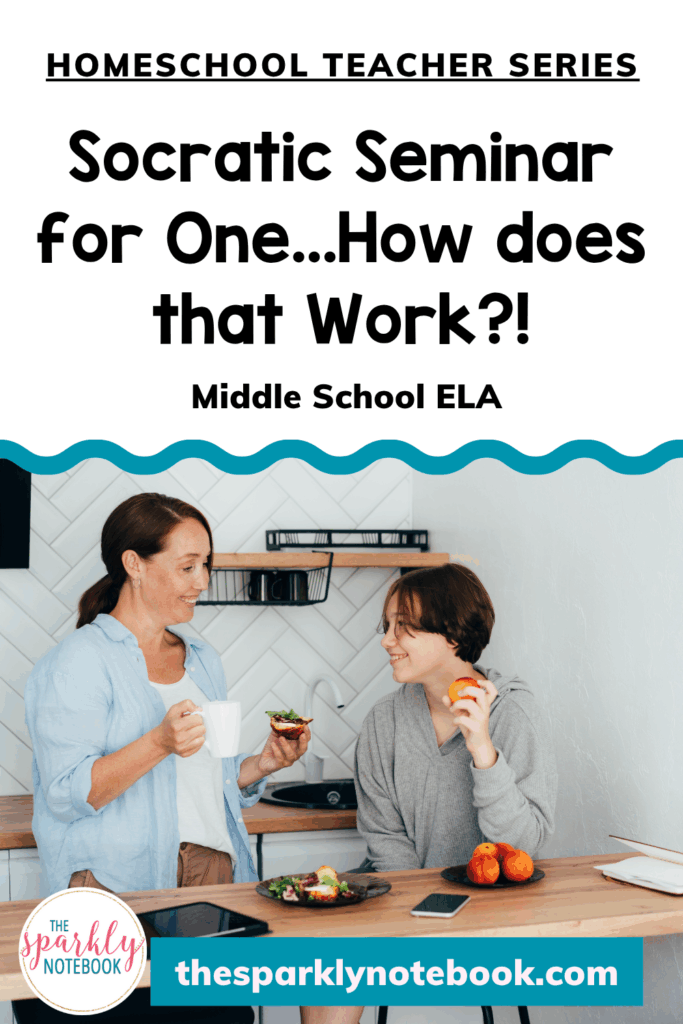
Middle school is the perfect time for students to learn how to dig deeper into texts, and Socratic Seminars bring the Speaking and Listening Standards (SL.1–3) to life. These standards focus on:
Even if you only have one student, these skills are still important. They build confidence, independence, and analytical thinking.
If you want a refresher on these standards, check out our posts:
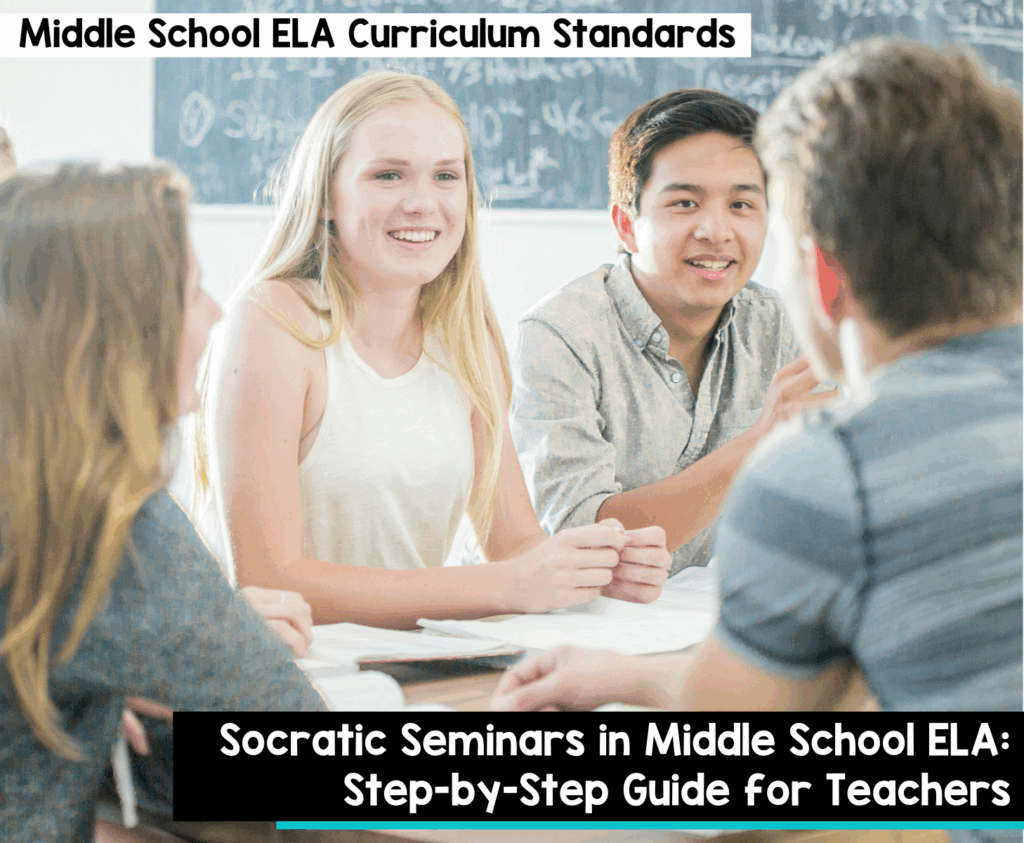

Here are some strategies you can try at home:
Have your student prepare questions and evidence from a text, then you step in as the conversation partner. Ask follow-up questions, push them to cite evidence, and model how to dig deeper into the text.
Second to bringing in some additional people to discuss, this is the easiest way to get your student participating in a discussion of this kind.
Pro tip: Don’t be afraid to play “devil’s advocate.” Disagree with them respectfully and challenge them to defend their reasoning.
This next “Socratic Seminar for One” strategy is all about using your resources!
Pick a topic for discussion. A paired passage would work well. Then, have your student read through the passage, take notes, and prepare questions. Next, research the topic or put the passages into an AI engine like ChatGPT. Ask the AI engine to come up with some claims, counterclaims, unsupported claims, and discussion scenarios for the passages.
Then, put each generated point on paper slips in a cup or bowl. Ask your student to state a claim, make their point, and then randomly draw one from the bowl. Have the student listen to the point and respond either for or against the claim or idea. Their goal is to respond respectfully by providing support for their response.
By using this method, students can hear other ideas about the article they read. This will give them an idea about how a different perspective may change an argument. It will also give them a chance to think and respond to the claims and ideas being presented by someone else.
Ask your student to write the discussion out as if it were happening between a group of people.
Think of it like a drama/play. This is an advanced exercise, so this may not work for all teens.
After reading the article, text, or passage that will be discussed, give the student the background stories (or lenses) of the four “characters” who will participate in the discussion. Ask the student to write a script of how the debate would go down if these four people were actually in a discussion about the text.
This may be hard for some teens as it takes a lot of empathy and consideration to be able to speak for someone else or understand various perspectives. This is an advanced way to work through a Socratic Seminar as it requires the student writing the script to think about how information may be presented and debated among a group of people with different life experiences.
When the student is done writing, read the script aloud with each of you playing a couple of roles. After presenting it once, ask the student to identify issues with the arguments being presented, and fix them if it works within the script to do so.
Pro Tip: Save time by asking an AI engine to create the background stories and focuses for the characters.
Socratic Seminars for one? Is it possible?
Yes!
It may look different than a traditional classroom circle, but the goals are the same:
Whether you’re guiding the discussion yourself, using tech tools, or encouraging them to consider the perspectives of others, you’re helping your child grow into a confident thinker and communicator.
Because in the end, it’s not about the number of voices in the room—it’s about the depth of the conversation.
We have resources to help teach all of the middle school ELA standards. Click here to see the one about the SL.1-3 standards!