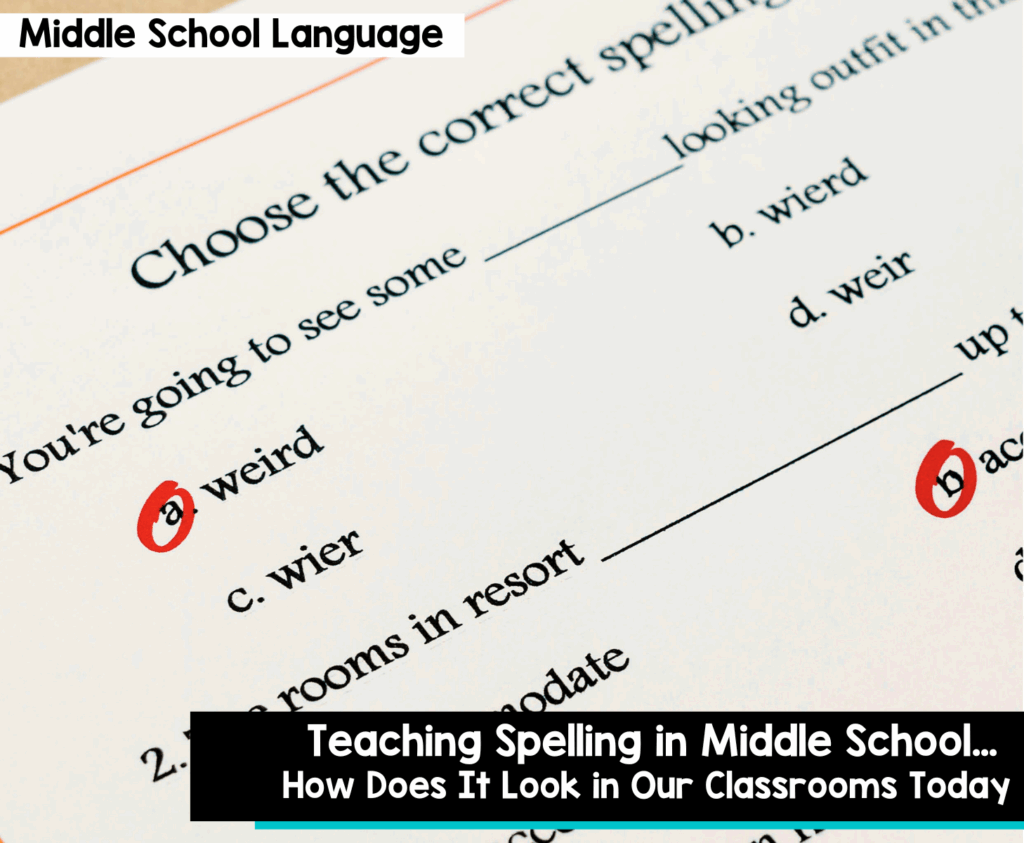

What does teaching spelling in middle school need to look like? What do the students really need to know?
Be honest: when you hear the word spelling, does it make you groan just a little?
For many middle school ELA teachers, spelling feels old-fashioned, like it belongs in an elementary classroom with Friday tests and red pens.
But here’s the thing: spelling is still part of our standards, so it still matters.
And not every student walks into your classroom with the same spelling background. Some learned to read and spell using phonetic rules; others pieced it together through wide reading exposure.
The result?
Big gaps in how confident students are with spelling, and those gaps often show up in their writing.
So let’s talk about how spelling fits into middle school ELA today, and how we can approach it without turning our classrooms into endless word list drills.
Is spelling part of your standards?
If you’re following the Common Core Standards, you’ll find that spelling is explicitly addressed under the Language Standards (L.2). These standards vary slightly across grades 6–8 but generally focus on:
It’s not about memorizing 20 words a week, it’s about helping students develop transferrable spelling strategies they can use in any piece of writing.
Before diving in, double-check your school’s policy on spelling instruction and assessment. Some districts require formal weekly spelling lists; others leave it to the teacher’s discretion.
Think of teaching spelling in middle school as less about lists and more about tools. Here are some practical ways to shift the focus:
Focusing on the rules of spelling connects it directly to vocabulary, word choice, and reading comprehension, all skills embedded across the standards.
Want to keep it engaging? Try weaving spelling into activities you already do:
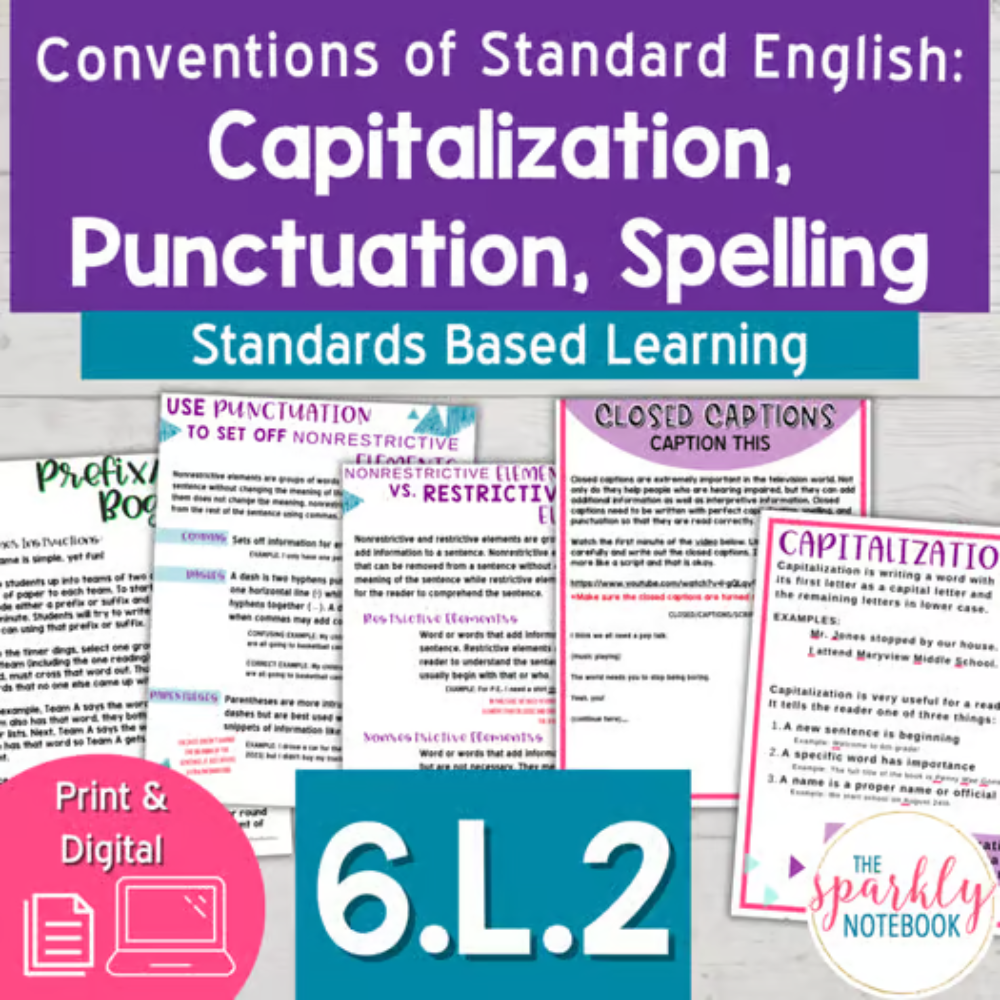
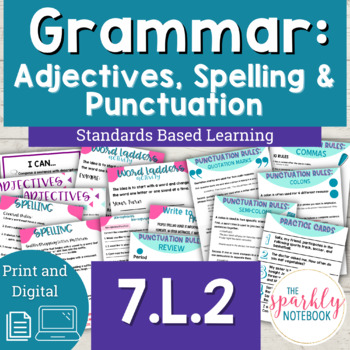
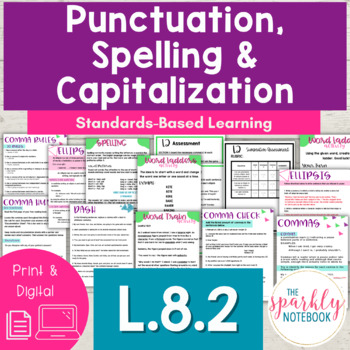
For a no-prep option, check out our standards-based Language Units (L.2), which directly address spelling within the expectations of the standards for each grade level. Click on the images below to learn more about these resources.
We’ve also written a blog post, How to Teach L.2 in Middle School ELA, that goes into depth on this standard at each grade level.
Final Thought: Spelling Still Matters
Middle schoolers may roll their eyes at spelling, but strong spelling habits support stronger writing, clearer communication, and deeper vocabulary understanding.
Teaching spelling in middle school doesn’t have to look like Friday spelling tests and endless drills.
By focusing on roots, affixes, and patterns, and tying spelling to reading and writing, you’ll give students tools they can carry with them far beyond your classroom.
So yes, spelling is still in the standards.
And yes, it’s worth teaching.
But you don’t have to dread it. You can make it meaningful, connected, and engaging.